Travel notesBy Al Mithaq
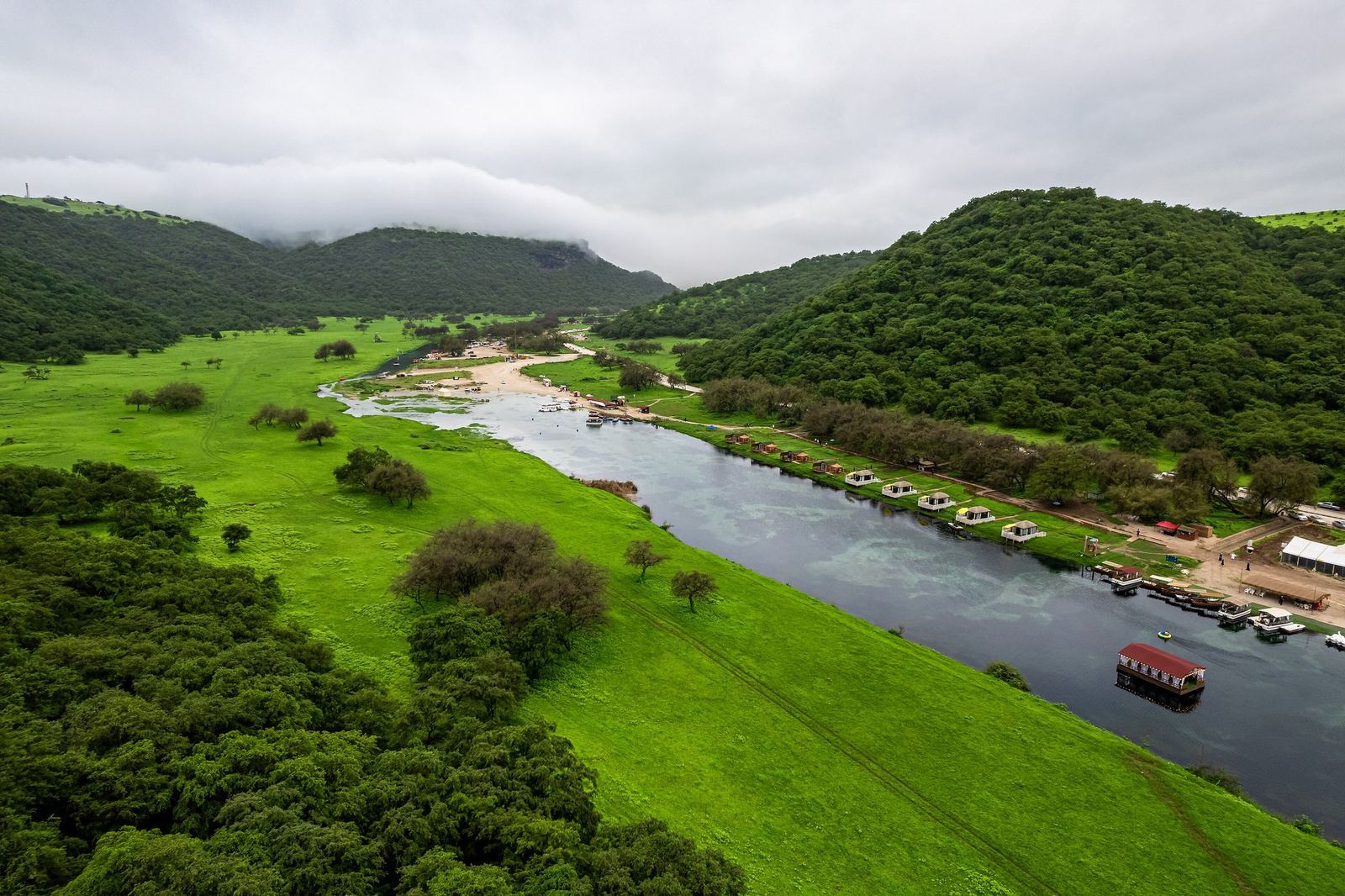
Green meadows and the lake of Wadi Darbat under monsoon cloud

Oman · travel notes

Oman: Mountains, wadis, souqs and a green monsoon

Grand Mosque, Mutrah Souq, Wadi Shab, Nizwa Fort, the Sharqiya Sands and Salalah's green khareef: 17 places to visit in Oman, with tips for Gulf families.

Photo: Muiad123 · CC BY-SA 4.0 · Wikimedia Commons

Oman at a glance

Oman is the Gulf's easy escape: about two hours from Kuwait, and suddenly there are mountains at the end of every street. Muscat keeps its old harbour, its covered souq and its white marble mosque. Drive two hours east and the coast breaks into a turquoise sinkhole, palm-filled wadis and a turtle beach. Drive two hours inland and you are in fort country, where terraced villages cool the air at 2,000 metres. In summer, Salalah turns green under the monsoon.

This guide follows one sensible loop: Muscat first, then the coast to Sur and a night in the Sharqiya Sands, then the interior around Nizwa, then a flight south to Dhofar. Musandam, with its sea cliffs and wooden dhows, is a separate short trip, often made from the UAE. Each place comes with its best months, one practical tip, and a reminder of what matters here: respect in villages and mosques, care in wadis, and shade in summer.

HomeBack to Al Mithaq Real Estate, Kuwait City

Muscat

The capital: a white marble mosque, a harbour souq, an opera house and a city beach.

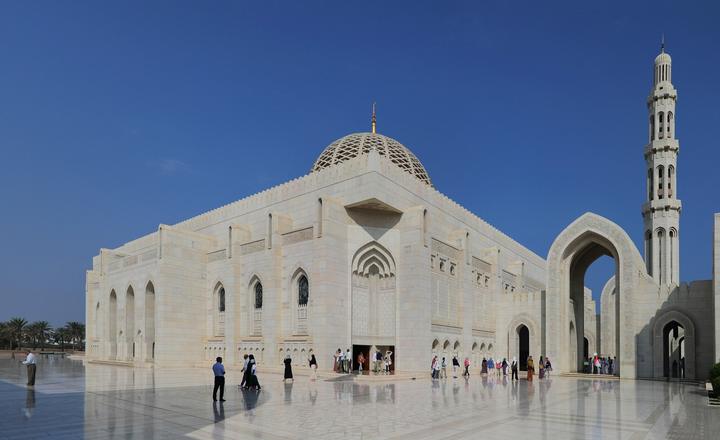
White marble walls, dome and minaret of the Sultan Qaboos Grand Mosque in Muscat1
Photo: Francesco Bini · CC BY-SA 4.0 · Wikimedia Commons
Muscat · Heritage

Sultan Qaboos Grand Mosque

Opened in 2001, the mosque holds around 20,000 worshippers, and its main hall is laid with a hand-woven carpet of about 21 tonnes under a crystal chandelier 14 metres tall. Walk the marble arcades and the gardens, then stand in the quiet of the prayer hall before the tour groups arrive.

Tip: Tourist visits run in the morning, Saturday to Thursday: dress modestly with arms, legs and hair covered, and check the times before you go.

October to April, early morning
  1. J
  2. F
  3. M
  4. A
  5. M
  6. J
  7. J
  8. A
  9. S
  10. O
  11. N
  12. D
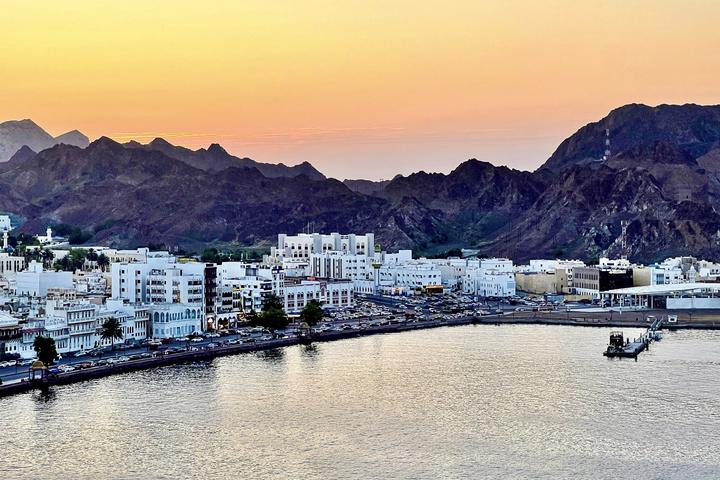
Mutrah harbour and corniche at sunset, with white buildings under the mountains2
Photo: Abubakr Saeed · CC BY 2.0 · Wikimedia Commons
Muscat · Shopping

Mutrah Souq and Corniche

Mutrah's covered market is about 200 years old, and locals call it Souq Al Dhalam, the market of darkness, because its roofed lanes shut out the sun. Buy frankincense, silver and halwa, then walk the harbour corniche at sunset past the fishing boats to the Portuguese-era fort on its rock.

Tip: Bargain politely for crafts, ask before photographing traders, and come after dark on a weekend to see the lanes at their liveliest.

October to April, from late afternoon
  1. J
  2. F
  3. M
  4. A
  5. M
  6. J
  7. J
  8. A
  9. S
  10. O
  11. N
  12. D
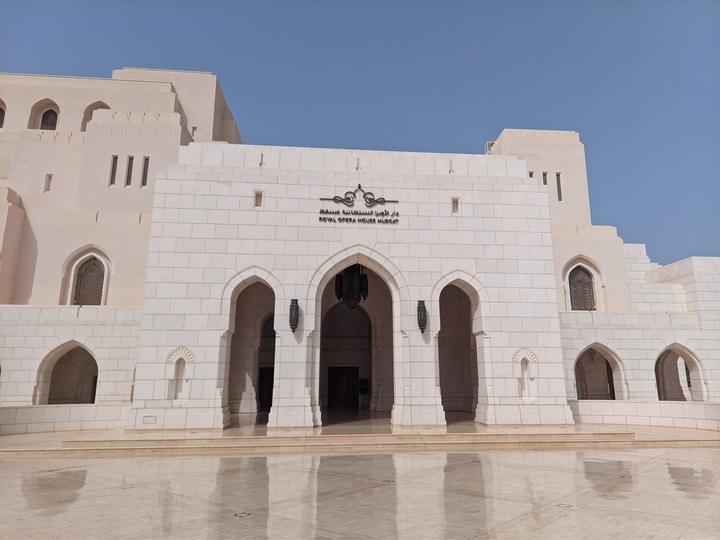
Arched stone entrance of the Royal Opera House Muscat3
Photo: Taha Al-Hayali · CC BY-SA 4.0 · Wikimedia Commons
Muscat · City

Royal Opera House Muscat

Opened in 2011 as the Gulf's first opera house, this pale stone building blends Omani and Italian ideas in marble and carved wood, set in formal gardens. By day join a guided tour of the auditorium; by night the programme runs from opera and ballet to orchestras and Arabic and Omani music.

Tip: Evening shows have a formal dress code (no jeans, T-shirts or trainers); book tours and tickets on the opera house website.

October to May, the performance season
  1. J
  2. F
  3. M
  4. A
  5. M
  6. J
  7. J
  8. A
  9. S
  10. O
  11. N
  12. D
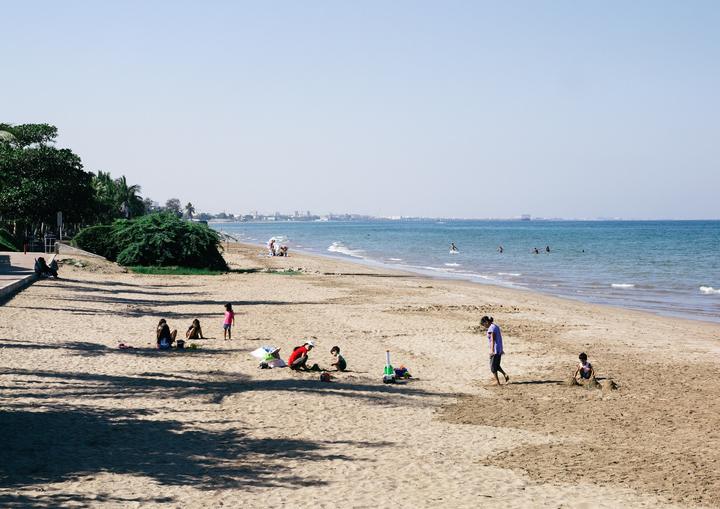
Qurum Beach in Muscat on a sunny day, families on the sand and the sea behind4
Photo: Juozas Šalna · CC BY 2.0 · Wikimedia Commons
Muscat · Sea

Qurum Beach

Muscat's long city beach runs beside a seafront promenade where families walk, jog and picnic in the cool hours. Behind it lies the Qurm Nature Reserve, a grey-mangrove forest that became Oman's first Ramsar wetland in 2013, with close to 200 bird species recorded. Watch from the edges, since the reserve itself is closed.

Tip: Swim only in calm conditions and heed the flags; modest swimwear and a cover-up off the sand are expected on this public beach.

October to April, at sunrise or in the last two hours of light
  1. J
  2. F
  3. M
  4. A
  5. M
  6. J
  7. J
  8. A
  9. S
  10. O
  11. N
  12. D

The coast to Sur and the Sharqiya Sands

Two hours east of Muscat the road passes a turquoise sinkhole, a wadi you swim through, a turtle beach and then the dunes.

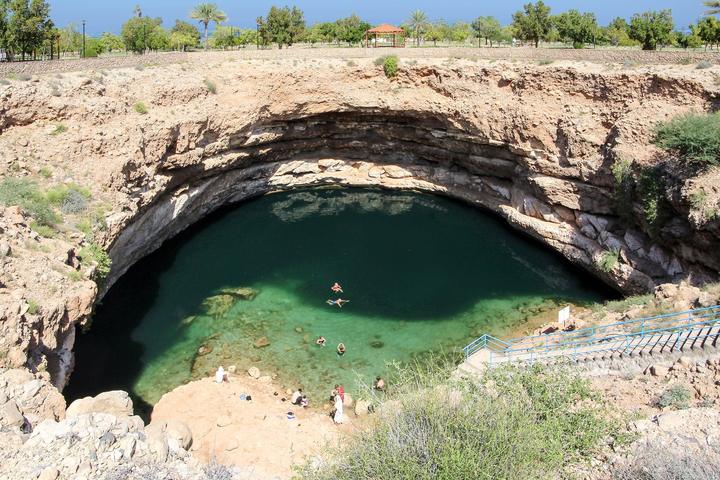
Turquoise water of the Bimmah sinkhole seen from the rim, with the stairway5
Photo: Dr. Thomas Liptak · CC BY-SA 4.0 · Wikimedia Commons
Dibab, Quriyat · Nature

Bimmah Sinkhole (Hawiyat Najm)

A limestone roof collapsed here and left a deep turquoise pool only about 600 metres from the sea, so its water is a mix of fresh and salt. Locals say a falling star made the hole, hence the name. Walk down the concrete stairs inside the park and swim while tiny fish nibble your toes.

Tip: The water is deep: life jackets for children and weak swimmers, no cliff jumping, and modest swimwear. About 1.5 hours from Muscat on the Sur road.

October to April, weekday mornings
  1. J
  2. F
  3. M
  4. A
  5. M
  6. J
  7. J
  8. A
  9. S
  10. O
  11. N
  12. D
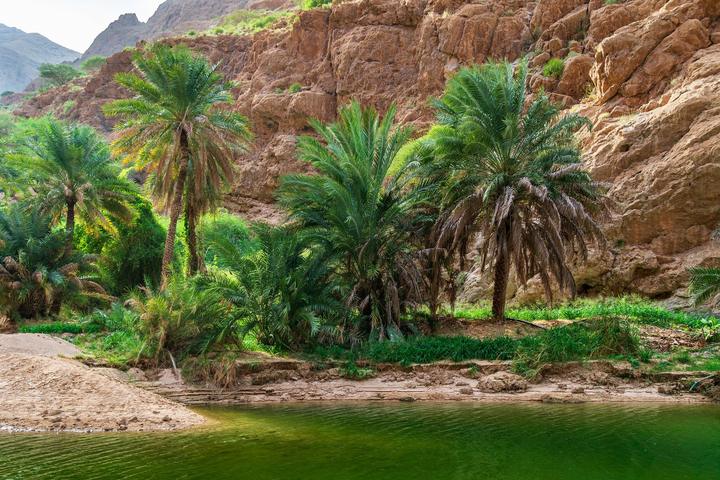
Date palms and a green pool below the cliffs of Wadi Shab6
Photo: dconvertini · CC BY-SA 2.0 · Wikimedia Commons
Tiwi, near Sur · Nature

Wadi Shab

A small boat takes you across the mouth of the wadi, then an hour's walk follows falaj channels past palms, banana trees and boulders to a chain of turquoise pools. The last stretch is a swim through a narrow gap into a cave where a waterfall pours in. About 170 km from Muscat airport.

Tip: Never enter when rain is forecast anywhere upstream; wear shoes with grip, carry water (no shops inside) and swim in a T-shirt and shorts over swimwear.

October to April; start early in May and September
  1. J
  2. F
  3. M
  4. A
  5. M
  6. J
  7. J
  8. A
  9. S
  10. O
  11. N
  12. D
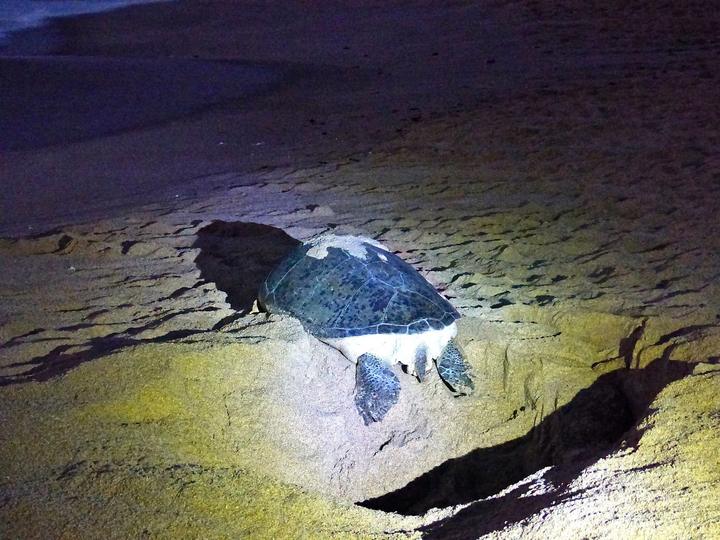
A green turtle on the sand at night at Ras Al Jinz7
Photo: John Crane · CC BY 2.0 · Wikimedia Commons
Ras Al Jinz, near Sur · Nature

Turtle watching at Ras Al Jinz

Oman's eastern tip is one of the Indian Ocean's most important nesting grounds for the endangered green turtle, and this reserve is the only place in the country where the public may watch them. A guide leads small groups onto the dark beach at night and again before dawn, when hatchlings may scramble to the sea.

Tip: Sightings are never guaranteed. Book ahead, bring no torches or flash, keep quiet and keep your distance; the beaches nearby are closed at night.

June to September for nesting; late summer and autumn for hatchlings
  1. J
  2. F
  3. M
  4. A
  5. M
  6. J
  7. J
  8. A
  9. S
  10. O
  11. N
  12. D
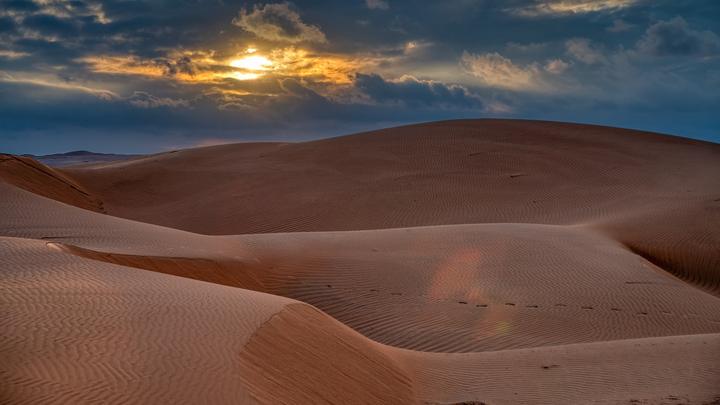
Sunset over the rippled dunes of the Sharqiya Sands8
Photo: Christoph Strässler · CC BY-SA 2.0 · Wikimedia Commons
Bidiyah and Al Wasil · Desert

A night in the Sharqiya Sands

Still known to many as the Wahiba Sands, this sea of dunes covers more than 10,000 square kilometres and rises to about 100 metres. Desert camps beyond Al Wasil and Bidiyah offer cardamom coffee and dates, camel rides, sandboarding, a 4x4 climb to the crest for sunset, then dinner under a sky crowded with stars.

Tip: Drive into the dunes only in a 4x4 with sand experience, or take the camp's transfer; book ahead, since many camps close in summer.

October to March; arrive by mid-afternoon for sunset on a dune
  1. J
  2. F
  3. M
  4. A
  5. M
  6. J
  7. J
  8. A
  9. S
  10. O
  11. N
  12. D

The interior: Nizwa and the Hajar mountains

Fort country, with Nizwa's round tower, UNESCO-listed Bahla, and villages cooled by altitude on Jebel Akhdar and Jebel Shams.

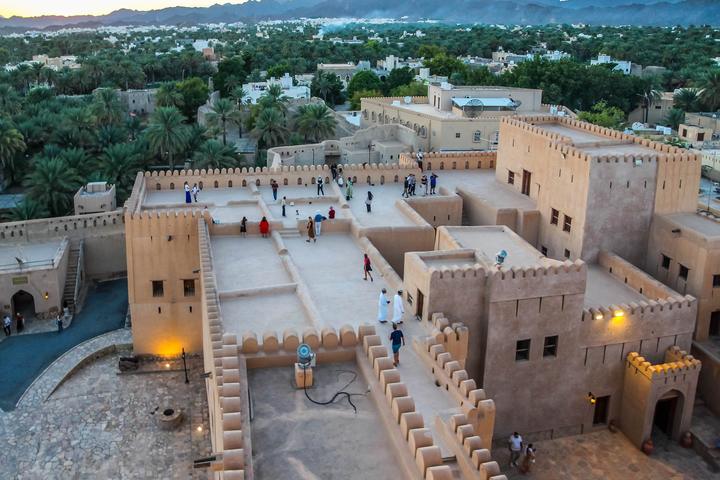
Rooftops and walls of Nizwa Fort at dusk, with palm groves and mountains behind9
Photo: Dr. Thomas Liptak · CC BY-SA 4.0 · Wikimedia Commons
Nizwa · Heritage

Nizwa Fort and Souq

Built in the mid-17th century under Imam Sultan bin Saif, Nizwa Fort was the seat of Oman's imams, and its huge round tower still bristles with gun openings and hidden pit traps. Climb to the roof for palm gardens and the Hajar peaks, then cross to the souq for dates, halwa, silver and khanjars.

Tip: Steep narrow stairs and low doorways inside: hold small children's hands. Go early; an entry fee applies, so check the hours before you drive.

October to April; Friday morning for the livestock market
  1. J
  2. F
  3. M
  4. A
  5. M
  6. J
  7. J
  8. A
  9. S
  10. O
  11. N
  12. D
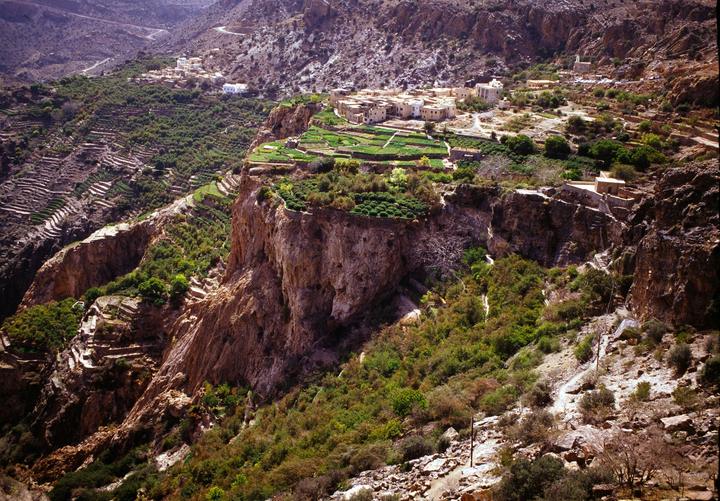
A village on the cliff edge above green farming terraces on Jebel Akhdar10
Photo: Ketan Mehta · CC BY-SA 3.0 · Wikimedia Commons
Saiq Plateau · Mountains

Jebel Akhdar and the Three Villages Walk

The Saiq Plateau sits at about 2,000 metres, cool enough for peaches, pomegranates and the famous Damask roses that villagers distil into rose water each spring. A path of a few kilometres links the terraced villages of Al Ayn, Al Aqr and Ash Shirayjah along cliff edges and old falaj channels.

Tip: Only 4x4 vehicles are allowed past the police checkpoint at the foot of the mountain; bring warm layers, since nights up here are cold in winter.

All year; March and April for the roses; first light in summer
  1. J
  2. F
  3. M
  4. A
  5. M
  6. J
  7. J
  8. A
  9. S
  10. O
  11. N
  12. D
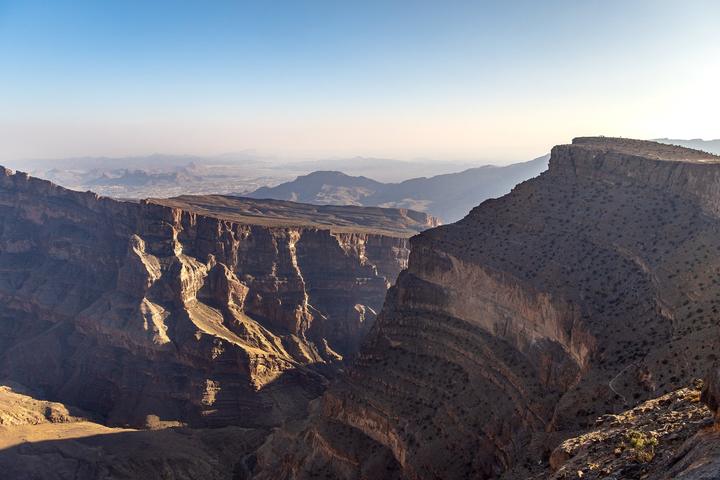
Layered cliffs of the Wadi Ghul canyon below Jebel Shams11
Photo: dconvertini · CC BY-SA 2.0 · Wikimedia Commons
Al Hamra · Mountains

Jebel Shams and the Wadi Ghul canyon

Oman's highest mountain rises to about 3,000 metres, and from its plateau the ground drops roughly a kilometre into Wadi Ghul, the Grand Canyon of Arabia. Sit on the rim at sunrise, buy a goat-hair rug from the families of Al Khitaym, and if you are steady on your feet take the Balcony Walk along the canyon wall.

Tip: Viewpoints have no railings: stay well back and hold children firmly. The last stretch of road is gravel, so a 4x4 is the safe choice.

All year, at sunrise or late afternoon; dawn starts in summer
  1. J
  2. F
  3. M
  4. A
  5. M
  6. J
  7. J
  8. A
  9. S
  10. O
  11. N
  12. D
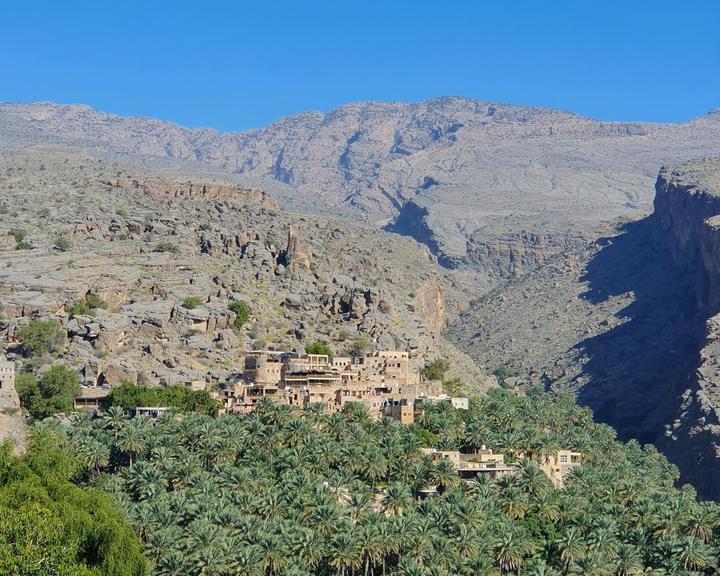
Mud-brick houses of Misfat Al Abriyeen above a palm oasis, with mountains behind12
Photo: Broc · CC0 · Wikimedia Commons
Al Hamra · Heritage

Misfat Al Abriyeen

This mud-brick village hangs on a mountainside at about 900 metres, its stepped lanes dropping to palm groves watered by a falaj that has served the community for some 2,000 years. In 2021 the UN tourism body named it one of its Best Tourism Villages, and residents now run restored houses as guest lodges.

Tip: People live here: park at the edge, dress modestly, keep voices low, ask before photographing, and never wash or wade in the falaj.

October to April; stay a night to have the lanes to yourself
  1. J
  2. F
  3. M
  4. A
  5. M
  6. J
  7. J
  8. A
  9. S
  10. O
  11. N
  12. D
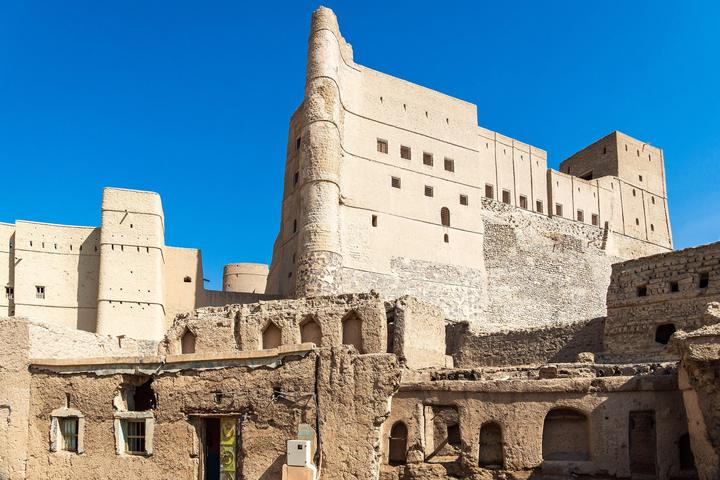
The high walls and towers of Bahla Fort above old mud-brick houses13
Photo: dconvertini · CC BY-SA 2.0 · Wikimedia Commons
Bahla · Heritage

Bahla Fort

Oman's first World Heritage Site, listed in 1987, was the capital of the Banu Nebhan from the 12th to the 15th century. After years on UNESCO's danger list it was rebuilt in earth and reopened in 2012. Walk the battlements, then follow the mud lanes below and the oasis wall of more than 12 kilometres.

Tip: Little shade and little signage: carry water, go early or late, and consider a guide. The mud ruins around the fort are fragile, so do not climb them.

October to April, early or late in the day
  1. J
  2. F
  3. M
  4. A
  5. M
  6. J
  7. J
  8. A
  9. S
  10. O
  11. N
  12. D

Dhofar and Salalah

The south turns green and misty from late June to September, with lakes, seasonal waterfalls and a wild coast of blowholes.

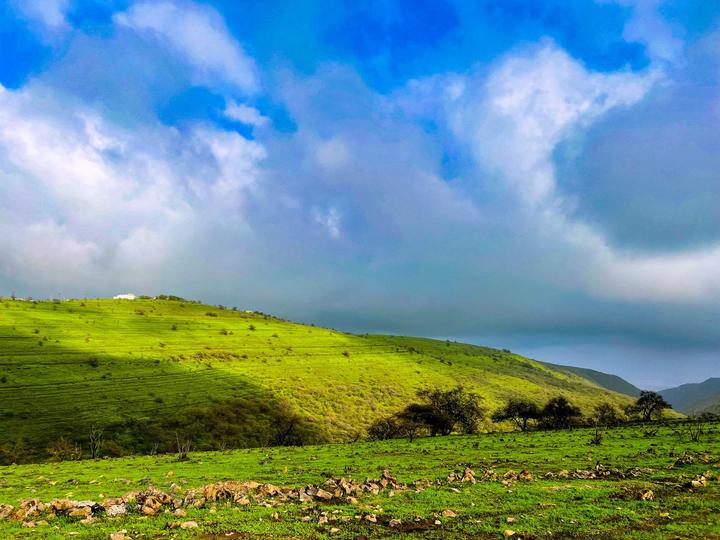
Bright green hills under monsoon clouds near Salalah during the khareef14
Photo: Murshid Thali Paramban · CC BY-SA 4.0 · Wikimedia Commons
Salalah, Dhofar · Nature

Khareef season in Salalah

From 21 June to 21 September the monsoon settles over Dhofar: cloud, drizzle and mild air while the rest of the Gulf bakes, and the hills from Mirbat to Dhalkut turn green. Springs swell, seasonal waterfalls run, camels graze in meadows, and more than a million visitors come each year, most of them from Oman and the Gulf.

Tip: Never swim in the sea during khareef (high waves and undercurrents); drive slowly in fog with lights on, watch for camels, and book hotels early.

Late June to September; mid-July to late August is the peak
  1. J
  2. F
  3. M
  4. A
  5. M
  6. J
  7. J
  8. A
  9. S
  10. O
  11. N
  12. D
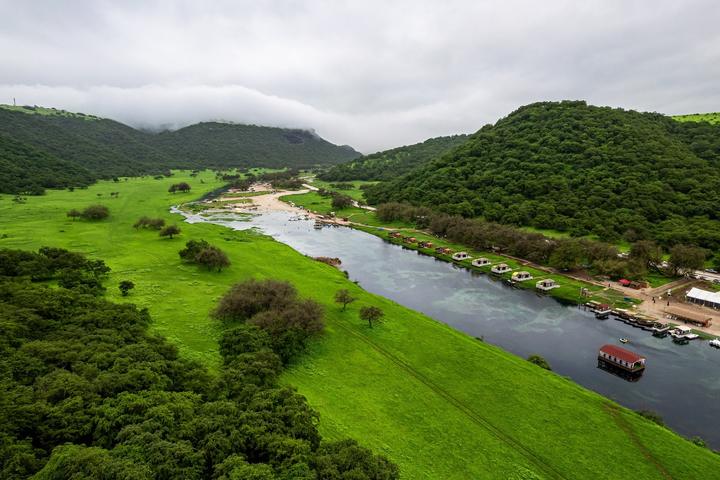
Green meadows and the lake of Wadi Darbat under monsoon cloud15
Photo: Muiad123 · CC BY-SA 4.0 · Wikimedia Commons
Taqah, Dhofar · Nature

Wadi Darbat

Inland from Taqah, a chain of lakes fills with the khareef rains and runs down towards the Khor Rori lagoon, past meadows where camels and cattle wade into the water. In a good season the stream spills over a natural tufa cliff to the plain below. Picnic on the banks and take a boat out on the lake.

Tip: Banks are slippery and the water is deeper than it looks: keep children close and stay out of the lakes unless swimming is clearly allowed; come early on a weekday in khareef.

July to October; the waterfall only in a strong khareef
  1. J
  2. F
  3. M
  4. A
  5. M
  6. J
  7. J
  8. A
  9. S
  10. O
  11. N
  12. D
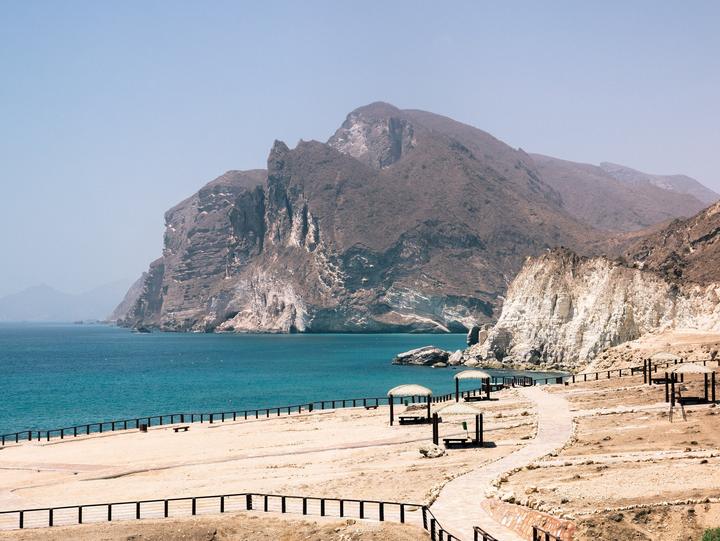
Mughsail bay with its white beach and limestone headland16
Photo: pukomuko (Flickr) · CC BY 2.0 · Wikimedia Commons
West of Salalah · Sea

Mughsail Beach and the Marneef blowholes

West of Salalah, a white bay of some six kilometres ends in sheer limestone cliffs. Beneath them, beside the Marneef rock shelter, holes in the shelf throw seawater high into the air whenever the swell is up, loudest in the khareef, and a railed path brings you close. Frankincense trees grow in the wadis nearby.

Tip: Stay behind the railings, since spray makes the rock slippery, and do not swim when the sea is rough, especially in the khareef months.

October to April for the beach; July to September for the blowholes
  1. J
  2. F
  3. M
  4. A
  5. M
  6. J
  7. J
  8. A
  9. S
  10. O
  11. N
  12. D

Musandam

A separate peninsula of sea cliffs and inlets north of the UAE, explored by wooden dhow from Khasab.

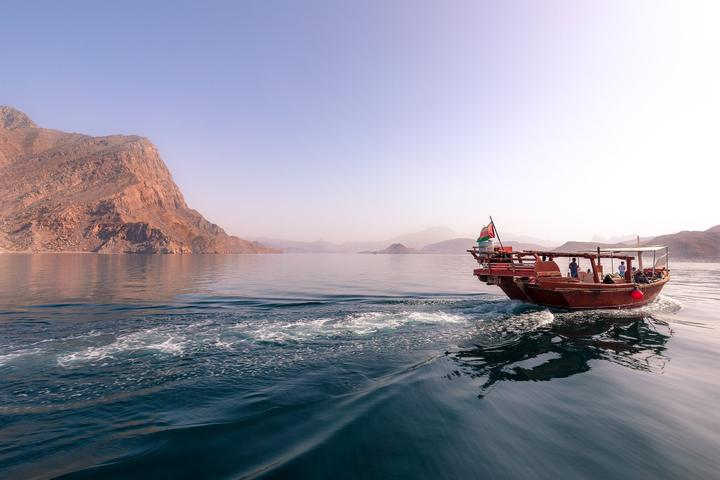
A wooden dhow sailing between the cliffs of Khor Ash Sham in Musandam17
Photo: Robert Haandrikman · CC BY 2.0 · Wikimedia Commons
Khasab, Musandam · Sea

Dhow cruise through Khor Ash Sham

From Khasab a carpeted wooden dhow glides into Khor Ash Sham, the longest of Musandam's inlets at about 16 kilometres, between bare mountains that fall straight into the sea. Dolphins often ride the bow wave. Boats anchor off Telegraph Island, where a British cable station stood in the 1860s, for swimming and snorkelling.

Tip: Dolphins are likely but never promised; bring a hat and sunscreen for the open deck, wear a life jacket to snorkel, and if driving from the UAE check border and insurance rules first.

October to April
  1. J
  2. F
  3. M
  4. A
  5. M
  6. J
  7. J
  8. A
  9. S
  10. O
  11. N
  12. D
HomeBack to Al Mithaq Real Estate, Kuwait City

What to eat

Shuwa

Lamb or goat rubbed with spices, wrapped in banana or palm leaves and slow-cooked in an underground pit; the dish of Eid, put in the ground on the first day and eaten on the second or third.

Harees

Wheat and meat cooked slowly to a thick, comforting paste, a Ramadan favourite; UNESCO listed it in 2023 on a joint file from Oman, Saudi Arabia and the UAE.

Omani halwa

A soft, sticky sweet of sugar, ghee, saffron, almonds and rose water, offered to guests with coffee and dates; Nizwa Souq has a whole row of stalls selling it by the tub.

Kahwa and dates

Coffee spiced with cardamom, poured from a metal pot into small cups and always served with dates or halwa. It is polite to accept; shake the cup gently when you have had enough.

Qabooli

Rice simmered with spiced meat until both are tender, finished with ghee and served in a heap for the whole table; the everyday feast dish of Omani homes.

Good to know

Questions people ask

When is the best time to visit Oman?

October to April is comfortable almost everywhere, with warm days and cool nights in the mountains. July to September is the time for Salalah's khareef, when Dhofar turns green while the rest of the Gulf is at its hottest.

How many days do you need in Oman?

Four or five days cover Muscat, the coast to Sur and a night in the desert. Add two or three for Nizwa and the mountains. Salalah is a separate trip of three or four days, best in khareef.

Do you need a 4x4 in Oman?

Not for Muscat, the coast road, Nizwa or Salalah. You do for Jebel Akhdar, where police turn other cars back, for the last stretch of Jebel Shams, and for driving into the Sharqiya Sands; otherwise take a camp transfer.

Is Oman good for families with children?

Yes. Beaches, the sinkhole, desert camps, turtle walks and forts all suit children, with life jackets in deep water, hands held on fort stairs, and early starts in the warm months.

Can you swim in the sea at Salalah during khareef?

No. From June to September the waves and undercurrents are dangerous. Enjoy the lakes and springs from the banks instead, and swim in the sea from October.

HomeBack to Al Mithaq Real Estate, Kuwait City
Sources we checked (45)

More travel notes

After the trip

Fell for Oman? Own a home here.

Al Mithaq sells homes in Muscat, on the sea at Yiti and Al Mouj, and in Sultan Haitham City. Some homes in Oman can come with a residency for you and your family.

How residency through property works

What brings you to Oman?

Step 1 of 2 · tap one

Where can we reach you?

Your details go to Al Mithaq Real Estate's sales team through our customer records system, and help us measure our advertising. We never sell them or add you to mailing lists.call you back the same working day.

Thank you. We will call you soon. Taking you to our home page now.

Go to the home page